The Different Types of Canes

Which Mobility Aid Might Be Right for You?
A cane can be a simple but incredibly helpful mobility aid. Whether you need a little extra balance, support for an injured or painful leg, or assistance going longer distances, choosing the right type of cane can make a real difference in your comfort and confidence.
But not all canes are the same. From single-point canes to quad canes with four points of contact, there are several options available. Understanding the differences can help you have a better informed convo with your doctor, physiotherapist, or occupational therapist.
1. Single-Point Canes
A standard cane has one tip that touches the ground. It is one of the most common types of canes and is often used by people who need a small amount of support.
Single-point canes may help with:
- Mild balance difficulties
- Mild weakness in one leg
- Arthritis or joint pain
- Recovery from certain injuries
- Feeling more secure while walking
Because they have a small base, standard canes are lightweight and easy to use. They can also be easier on stairs and in narrow spaces.
However, a single-point cane does not provide as much support as a cane with a wider base.
Best for:
People who need a little extra support and balance assistance but are still able to walk relatively steadily.
2. Offset Canes
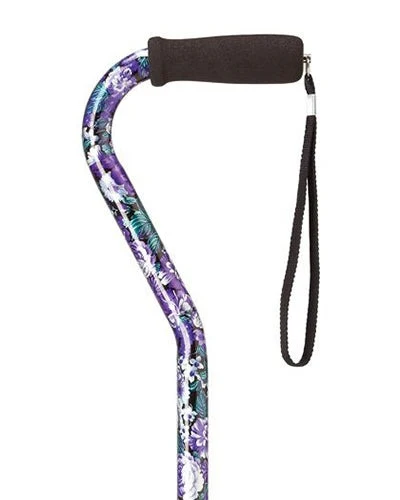
Offset canes have a curved or angled shaft beneath the handle. This helps distribute some of the your weight through the cane more effectively than some straight canes.
They are available with adjustable heights and comfortable handles.
Benefits of an offset cane:
- Often lightweight
- Usually height adjustable
- Provides reliable support for walking
- Available with different handle styles
- Easy to use indoors and outdoors
Offset canes are popular because they offer a good combination of stability and convenience.
Best for:
People who need regular support while walking but do not require a wide-based mobility aid.
3. Derby-Handle Canes
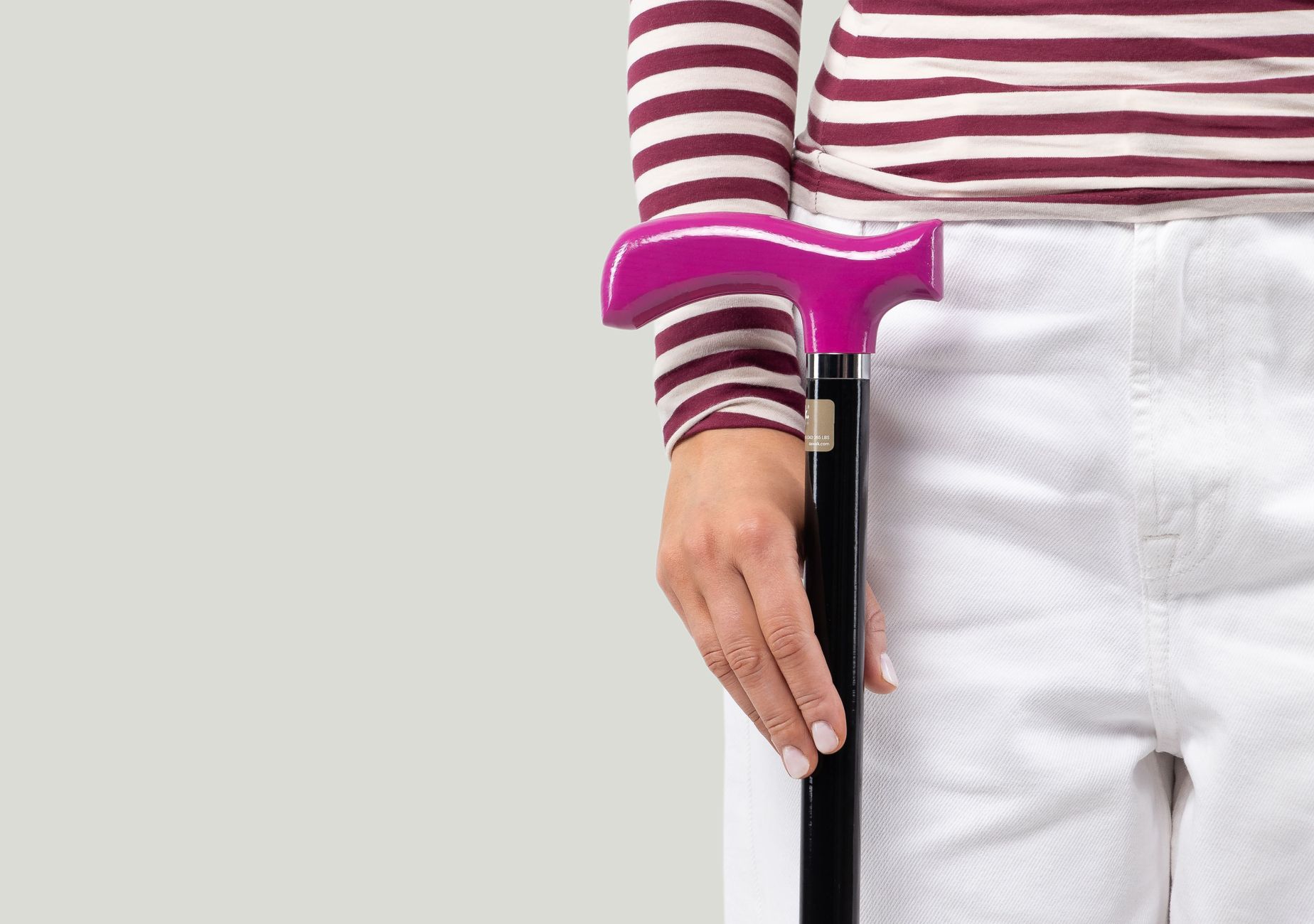
Derby canes have a curved handle like a traditional cane. The handle is designed to fit comfortably in the hand and to let the cane be hooked over an arm or chair.
These canes are often chosen because they combine functionality with a more stylish appearance.
Benefits of derby canes:
- Comfortable, classic handle
- Available in many styles and finishes
- Can be lightweight
- Easy to carry
- Suitable for occasional/regular use, depending on the design
Remember that the look of a cane should not be the only consideration. A cane has to also provide the level of support you need.
Best for:
People who need light to moderate support and want a comfortable, traditional looking cane.
4. Folding Canes
Folding canes are designed to break down into sections, making them great for travel and storage in small spaces.
Many are adjustable in height and can be stored in a bag when they are not needed.
Benefits of folding canes:
- Convenient for travel
- Easy to store
- Lightweight
- Can fit into many bags or vehicles
The biggest consideration is stability. A folding cane should feel secure and lock firmly into place before use.
Best for:
People who need occasional support or want a mobility aid that is easy to haul around.
5. Quad Canes
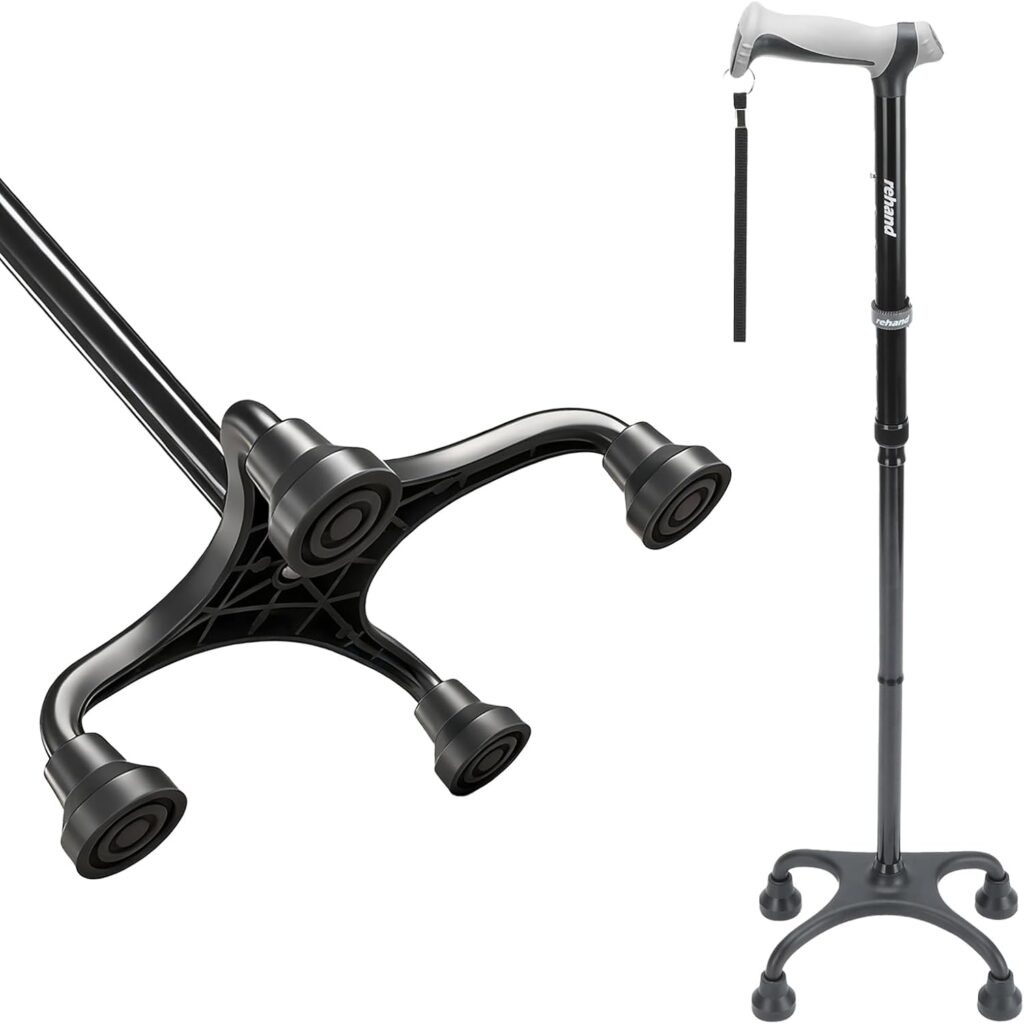
A quad cane has four tips on the bottom instead of just one. This gives a wider base of support and makes the cane more stable.
There are generally two main styles:
- Small-base quad canes
- Large-base quad canes
A small-base quad cane is easier to manoeuvre, while a large-base version provides a wider support base.
Benefits of quad canes:
- More stable than a single-point cane
- Wider base of support
- May give confidence to people with balance problems
- Some models can stand on their own when released
Quad canes can be heavy and cumbersome. Their wider base can also make them more difficult to use on stairs or uneven surfaces.
Best for:
People who need more support than a traditional single-point cane can provide.
6. Hemi Walkers
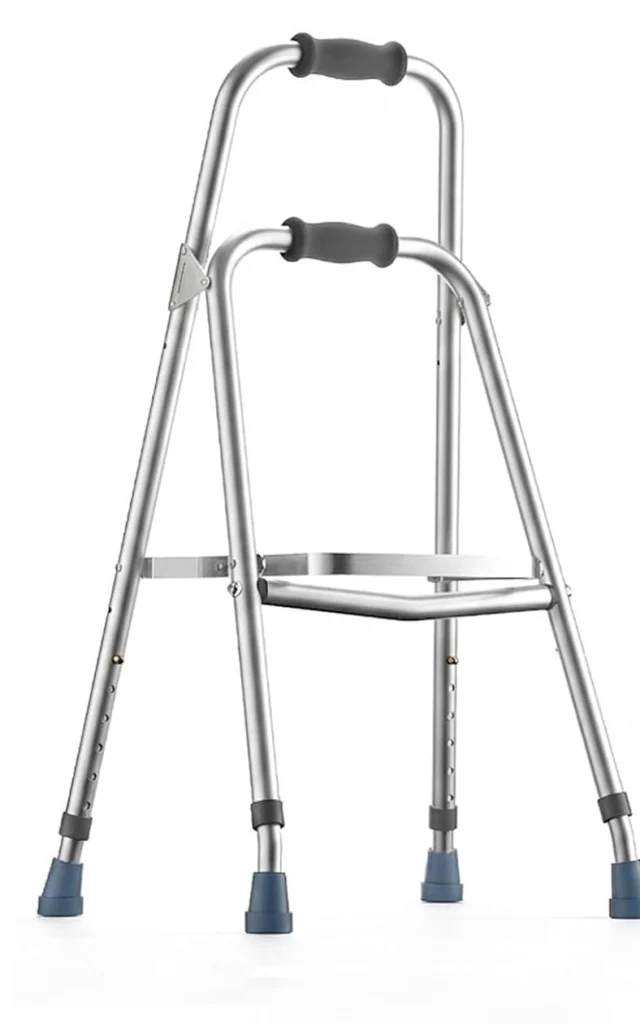
While technically different from a traditional cane, hemi walkers are often considered by people who are looking for more support.
A hemi walker has a wider base and provides significantly more stability than a standard cane while remaining smaller than a traditional walker.
Benefits of a hemi walker:
- Provides a large base of support
- More stable than a standard or quad cane
- Can often be used with one hand
- May be helpful for people who need significant support on one side
With the additional stability, a hemi walker may be helpful in situations where a regular cane does not provide enough support.
Best for:
People who need more support than a single point cane but want a one-handed mobility aid.
Choosing the Right Cane Handle
The handle of a cane can make a big difference in how comfortable a cane feels.
Foam or Soft-Grip Handles
These handles are often more comfortable for people with sensitive or painful hands.
They may help reduce pressure on the palm during long periods of walking.
Ergonomic Handles
Ergonomic handles are designed to better fit the shape of the hand. They may help distribute pressure more comfortably.
These can be particularly useful for people with:
- Hand pain
- Arthritis
- Joint stiffness
- Reduced grip strength
Traditional Curved Handles
Traditional curved handles are common on derby and other classic-style canes. They can be comfortable and convenient, although individual comfort varies.
The best handle is the one that allows you to maintain a secure grip without causing significant discomfort.
Adjustable vs. Fixed-Height Canes
Adjustable Canes
Adjustable canes allow the height to be changed, making it easier to find a proper fit.
They are especially helpful if:
- More than one person may use the cane
- Your footwear changes your height significantly
- You are unsure of the correct cane height
Fixed-Height Canes
Fixed-height canes are often cut or manufactured to a specific length.
They can be a good option when you already knows your ideal cane height.
Choosing the Right Cane Tip
The tip of a cane is just as important as the handle.
A standard rubber tip gives traction on many indoor surfaces. And specialty tips are also available.
Common cane tip options include:
- Standard rubber tips
- Wider stability tips
- Pivoting tips
- Multi-point tips
- Ice and snow tips for winter conditions
A worn-out rubber tip can reduce traction, so it is important to inspect the tip regularly and replace it when necessary.
How Much Support Do You Need?
One of the most important questions when choosing a cane is how much support you need.
A cane may be appropriate if you need mild to moderate assistance. If you are placing a significant amount of your body weight on your cane, feeling unstable despite using it, or struggling to walk safely, a different mobility aid may provide better support.
Depending on the situation, alternatives may include:
- A quad cane
- A hemi walker
- A standard walker
- A rollator
- A wheelchair or mobility scooter for longer distances
Using a mobility aid that provides enough support can help you move with more comfort and confidence.
Using a Cane Correctly
A cane is used on the opposite side of the weaker or more painful leg.
For example, if your right knee is painful, you would typically hold the cane in your left hand.
The cane and the affected leg usually move forward together. However, the best technique can depend on your specific condition, injury, strength, balance, and walking pattern.
A physiotherapist or occupational therapist can help make sure your cane is:
- The correct height
- Properly adjusted
- Appropriate for your needs
- Being used with the safest technique
When a Cane May Not Be Enough
Sometimes, a person starts with a cane and eventually discovers that they need more support.
You may want to speak with a healthcare professional about a different mobility aid if:
- You frequently feel like you are going to fall
- Your knee or hip repeatedly gives way
- You are putting a significant amount of weight through the cane
- Walking remains painful
- You cannot comfortably walk longer distances
- Your balance is becoming worse
- You need support on both sides of your body
There is no failure in moving from a cane to a walker, rollator, wheelchair, or another mobility aid. The right mobility aid is simply the one that helps you move as safely, comfortably, and independently as possible.
Canes come in many different styles, and each offers a different level of support. A lightweight folding cane may be perfect for one person, while someone else may need the increased stability of a quad cane or hemi walker.
The most important thing is choosing a mobility aid based on your support needs rather than what you think you “should” be using. A properly fitted and appropriately chosen mobility aid can make everyday activities easier and help you maintain your independence.
If you are unsure which type of cane is right for you, consider speaking with a physiotherapist, occupational therapist, or other qualified healthcare professional who can assess your mobility and help you choose an option that fits your individual needs.