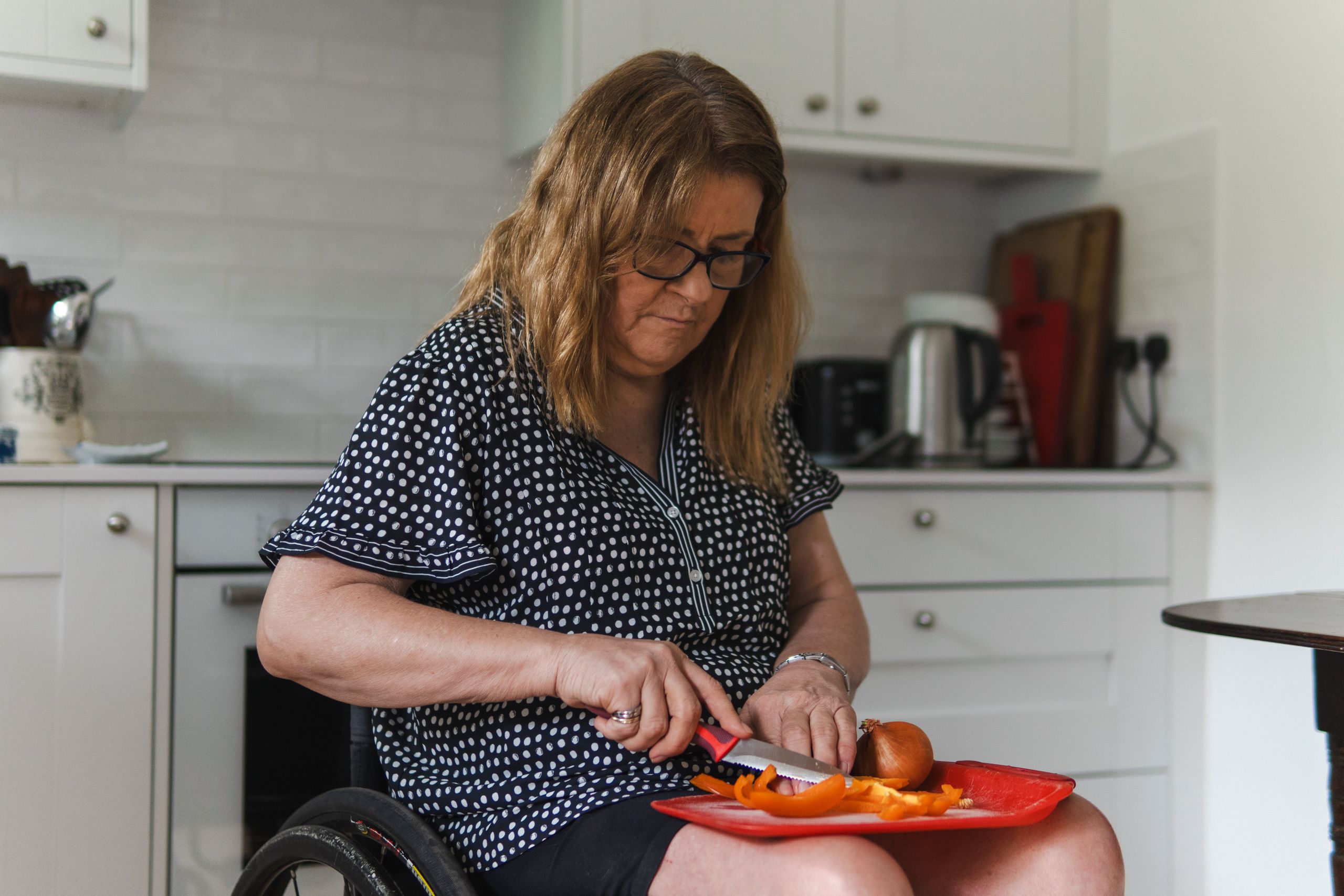
Adaptive Cooking: How to Set Up Your Kitchen

For many people living with chronic pain, fatigue or a dynamic disability, cooking isn’t just about making dinner, it’s an endurance event.
Standing for long periods, lifting heavy pots, chopping veggies and bending into lower cupboards can quickly drain your energy or trigger a painful flare-up. The good news is that an adaptive kitchen isn’t about expensive renos. A few thoughtful changes can make cooking safer, easier and much more enjoyable.
Whether you use a cane, walker, rollator, wheelchair or simply deal with fluctuating energy levels, these adaptive cooking tips can help you regain confidence in the kitchen while conserving your precious energy.
What Is Adaptive Cooking?
Adaptive cooking means changing the way you prep meals to work with your body instead of against it. It’s about reducing unnecessary movements, minimizing pain, conserving energy and making everyday tasks more accessible.
There’s no “right” way to cook. If sitting instead of standing helps you prepare a healthy meal, that’s adaptive cooking. If buying pre-cut vegetables saves you from a fibromyalgia flare, that’s adaptive cooking too.
The goal isn’t perfection, it’s independence.
Organize Your Kitchen into Work Zones
Think about how often you walk back and forth while cooking.
Instead, create small work zones where everything you need is within easy reach.
Prep Zone
Keep together:
- Cutting boards
- Knives
- Vegetable peeler
- Mixing bowls
- Measuring cups
- Colander
Cooking Zone
Store nearby:
- Pots and pans
- Wooden spoons
- Spatulas
- Oven mitts
- Cooking oils
- Frequently used spices
Coffee or Tea Station
Keep together:
- Kettle
- Coffee maker
- Tea bags
- Sugar
- Mugs
- Spoons
Grouping similar items reduces unnecessary trips across the kitchen.
Keep Everyday Items Between Waist and Shoulder Height
One of the easiest changes you can make is relocating frequently used items.
Store daily essentials where you don’t have to:
- Bend deeply
- Squat
- Climb on stools
- Reach above your head
Reserve high shelves for holiday dishes or items you rarely use. Avoid storing heavy appliances in lower cupboards if lifting them causes pain.
Sit Whenever Possible
One of the biggest energy-saving strategies is simply sitting down.
Consider using:
- A sturdy stool
- An adjustable-height chair
- A rolling kitchen chair
- A wheelchair, if that works best for you
Tasks you can comfortably do while seated include:
- Washing vegetables
- Chopping ingredients
- Mixing batters
- Measuring ingredients
- Peeling potatoes
- Decorating baked goods
Saving your standing energy for when it’s truly needed can make a big difference.
Reduce Heavy Lifting
Large stockpots and cast iron cookware can be surprisingly difficult to handle.
Instead, choose:
- Lightweight cookware
- Smaller pots
- Smaller casserole dishes
- Plastic mixing bowls
- Lightweight baking sheets
Fill pots with water near the stove instead of carrying them across the kitchen.
If possible, use a kettle or pitcher to transfer water into pots.
Use Helpful Adaptive Kitchen Tools
Many kitchen gadgets are designed to reduce strain on spicy hands and joints.
Helpful tools include:
- Electric can opener
- Jar opener
- Automatic pepper grinder
- Food processor
- Electric vegetable chopper
- Mandoline with safety guard
- Lightweight measuring cups
- Rocker knife
- Easy-grip utensils
- Ergonomic peelers
Even one or two adaptive tools can make meal prep significantly easier.
Embrace Convenience Foods Without Guilt
There is absolutely no shame in making cooking easier.
Convenience foods can save valuable energy.
Consider buying:
- Pre-cut veggies
- Frozen veggies
- Frozen diced onions
- Bagged salad mixes
- Rotisserie chicken
- Pre-cooked rice
- Canned beans
- Frozen fruit
These shortcuts allow you to eat nutritious meals without exhausting yourself.
Remember: feeding yourself is more important than making everything from scratch.
Batch Cook on Your Good Days
If your condition fluctuates, take advantage of higher-energy days.
Prepare extra:
- Soups
- Chili
- Pasta sauce
- Casseroles
- Burritos
- Meatballs
- Cooked chicken
Freeze individual portions for days when cooking feels impossible.
Your future self will thank you.
Keep Frequently Used Appliances Accessible
Avoid lifting heavy appliances every time you need them.
If you use something regularly, leave it on the counter whenever possible.
Examples include:
- Air fryer
- Slow cooker
- Electric pressure cooker
- Coffee maker
- Toaster
- Blender
If counter space is limited, consider storing heavier appliances on a pull-out/pull-up shelf.
Use Small Appliances to Save Energy
Many countertop appliances reduce both cooking time and physical effort.
Some of the best options include:
Slow Cooker
Simply add your ingredients and let dinner cook while you rest.
Air Fryer
Perfect for quick meals with minimal cleanup.
Electric Pressure Cooker
Excellent for soups, stews, rice, and one-pot meals.
Rice Cooker
Makes cooking grains effortless.
These appliances often eliminate the need to stand over the stove.
Make Cleanup Easier
Cooking is only half the job.
Reduce cleanup by:
- Using parchment paper
- Choosing one-pot meals
- Using disposable slow cooker liners if they suit your needs
- Filling the sink with soapy water while cooking
- Loading the dishwasher as you go
Less cleanup means less physical strain.
Improve Safety
Fatigue and brain fog can increase your risk of accidents.
Consider using:
- Non-slip mats
- Good lighting
- Sharp knives (they’re actually safer than dull ones)
- Heat-resistant gloves
- A reaching tool for high shelves
- Anti-fatigue mats if standing is necessary
Take your time and don’t rush.
Create an Emergency Meal Shelf
Not every day can be a cooking day.
Keep simple meals available for flare-ups.
Ideas include:
- Soup
- Crackers
- Peanut butter
- Tuna
- Pasta
- Instant oatmeal
- Shelf-stable milk
- Protein bars
- Applesauce
- Ready-to-drink meal replacements
Having easy options can reduce stress when you’re having a difficult day.
Learn to Ask for Help
If someone offers to help with meal prep, grocery shopping or washing dishes, consider accepting.
Many people living with chronic illness feel guilty asking for assistance, but conserving your energy allows you to focus on the things that matter most.
Adaptive cooking isn’t about doing everything yourself, it’s about finding the best way to get nourishing meals on the table.
Give Yourself Permission to Do Things Differently
Perhaps the most important adaptive cooking tip is this:
There is no prize for making life harder.
If sitting to chop vegetables helps, sit.
If paper plates save your joints after a long day, use them.
If frozen vegetables mean you’ll actually eat a healthy dinner, buy them.
Your kitchen should work for you and not the other way around.
Living with a dynamic disability means adapting as your body changes from day to day. Some days you may cook a huge meal, while other days a sandwich or bowl of soup is a victory. Both are enough.
By organizing your kitchen thoughtfully, using adaptive tools, and embracing energy-saving strategies, you can continue to enjoy cooking while protecting your health and preserving your independence.