
Medical Gaslighting and It’s Effects

When the Person Closest to You Doesn’t Believe Your Pain
Living with a chronic illness, disability or ongoing medical condition is difficult enough. It becomes infinitely harder when the person who is supposed to support you questions your symptoms, minimizes your struggles or suggests that you’re exaggerating. This behaviour is often referred to as medical gaslighting and it can have a significant impact on your physical and emotional health.
I lived this for 21 years but now I’m believed, supported and loved for just being me.
What Is Medical Gaslighting?
Medical gaslighting occurs when a person’s health concerns, symptoms or experiences are dismissed, minimized or blamed on something else. While the term is used to describe interactions with healthcare providers, it can also happen in relationships.
A partner may unintentionally, or intentionally, pooh-pooh your experiences by suggesting that your symptoms are “all in your head,” that you’re overreacting or that you’re simply not trying hard enough.
Over time, these messages can cause you to question your own feelings and avoid seeking the care you need.
Signs of Medical Gaslighting
Medical gaslighting can be subtle, making it a little difficult to recognize at first. Here are some common signs:
- Dismissing your pain or symptoms as stress, laziness or attention-seeking.
- Suggesting that you’re exaggerating your condition.
- Questioning whether you really need medications, mobility aids or medical treatments.
- Comparing your condition to someone else’s and implying you should be coping better, “like them”.
- Becoming irritated when you talk about your symptoms.
- Accusing you of using your illness as an excuse.
- Pressuring you to participate in things beyond your physical limits.
- Refusing to acknowledge actual medical diagnoses or recommendations from healthcare professionals.
You may find yourself constantly defending your symptoms or feeling guilty for needing help.
Why Does It Happen?
There are many reasons a partner may try to medically gaslight you.
Sometimes it stems from fear. A chronic illness or disability can change family roles, financial plans and future expectations. Some partners struggle to accept these changes and may minimize the situation because it feels overwhelming.
Other times, the behaviour may come from a lack of understanding. Invisible illnesses, chronic pain, fatigue disorders and mobility limitations are often difficult for healthy individuals to fully understand.
In more concerning situations, medical gaslighting may be part of a broader pattern of emotional manipulation or control.
Regardless of the reason, the impact on the person experiencing it can be gut-wrenching.
The Emotional Impact
Being repeatedly told that your symptoms aren’t real or aren’t serious enough can lead to:
- Self-doubt
- Anxiety
- Depression
- Feelings of isolation
- Reduced self-esteem
- Delayed medical care
- Increased stress, which can worsen symptoms
Many people begin questioning their own experiences. They may wonder if they are being dramatic or if they should simply “push through” the pain.
When this happens over a long period of time, it can make you unable to trust your own body.
The Unique Challenge of Invisible Illnesses
People living with invisible conditions often face additional issues. Conditions such as fibromyalgia, autoimmune diseases, chronic fatigue syndrome, migraines, arthritis and many mobility-related conditions don’t have obvious physical signs, for the most part.
A partner may see you having a relatively good day and assume you’re healthy, not realizing that your energy and pain levels can run like a roller coaster from one day to the next.
This misunderstanding can create tension and frustration on both sides of the relationship.
How to Respond
If you believe you’re experiencing medical gaslighting from a partner, or anyone else, consider the following steps:
Trust Your Experience
You are the expert on your own body. While symptoms may vary, your pain, fatigue and limitations are real even when they are not visible to others.
Keep Records
Maintaining symptom journals, medical reports and treatment notes can help validate your experiences and provide objective information when doubts arise.
Set Boundaries
It is okay to tell your partner that dismissive comments aren’t helpful. Healthy relationships require mutual respect, even when someone doesn’t fully understand what you’re experiencing.
Educate When Possible
Sharing articles, medical resources or information from healthcare providers may help a supportive but uninformed partner better understand your condition.
Seek Support
Connecting with support groups, counsellors, therapists or others living with similar conditions can provide valuable validation and perspective.
Consider Professional Help
If medical gaslighting is part of a pattern of emotional abuse, relationship counselling or individual therapy can help. Sometimes protecting your emotional well-being may require creating distance from unhealthy relationships.
What Supportive Partners Do Instead
A supportive partner doesn’t need to fully understand every symptom to be helpful.
Supportive partners:
- Listen without judgment.
- Believe what their loved one tells them about their body.
- Respect medical advice and treatment decisions.
- Ask how they can help.
- Encourage rest when needed.
- Adapt plans when symptoms flare.
- Recognize that chronic illness often involves good days and bad days.
But most importantly, they understand that believing someone is one of the most powerful forms of support they can offer.
Medical gaslighting by a partner can be incredibly painful because it comes from someone you trust. When your health concerns are repeatedly dismissed, it can leave you feeling alone and uncertain about your own experiences.
Remember that needing accommodations, treatment, mobility aids or rest does not make you weak. Your symptoms are real, your experiences are valid, and you deserve support from the people closest to you.
Healthy relationships are built on trust, empathy and respect, and that includes believing someone when they tell you they are hurting.
My Story
I was diagnosed with fibromyalgia in 1998.
When I met my former partner in 1997, we fell in love quickly and married in 1999. At the time, I believed I had found someone who would stand beside me through life’s challenges. Unfortunately, that wasn’t the case.
Almost from the beginning, my symptoms were met with skepticism and a raised eyebrow. He was there when my family doctor diagnosed me with fibromyalgia, yet he never truly believed what I was experiencing. He had a friend who was a physiotherapist, and in those days many people believed fibromyalgia was “all in your head” rather than a legitimate medical condition. Even my sister-in-law, who was also a physiotherapist, dismissed my illness. She viewed me as lazy, dramatic and unwilling to push through.
As the years passed and the pain and fatigue worsened, I began using a cane to help me stay mobile and balanced. Rather than offering support, my partner seemed embarrassed by it. He often rolled his eyes or acted exasperated when I needed to use my mobility aid. I still remember one day when I accidentally dropped my cane while getting out of the car. It landed on the sidewalk, and a kind stranger picked it up for me. Instead of appreciating the gesture or helping me himself, my partner appeared irritated and annoyed. To this day, I don’t understand why.
Years later, we took what was supposed to be a once-in-a-lifetime trip to Greece. It was beautiful, but it involved a tremendous amount of walking. As an overweight woman living with fibromyalgia, I knew it would be physically challenging. My concerns were brushed aside. Whenever I struggled to keep up, he became impatient and short-tempered.
One day, during a museum tour, I reached my limit. Every step hurt, and I simply couldn’t keep going. I sat down on a bench and asked if I could use a wheelchair. He reluctantly agreed, but his frustration was obvious. He spent the rest of the tour angry and distant.
I felt humiliated.
More than that, I felt small, insignificant and completely alone. It broke me.
When we eventually separated in 2020, something unexpected happened: I got my spark back. Being away from that constant criticism and disbelief changed everything. My stress levels dropped dramatically, and my fibromyalgia flares became less severe and easier to manage. For the first time in years, I felt like I could breathe.
More recently, however, I developed significant knee problems following a fall in 2023. I had previously undergone meniscus repair surgery in 2018, and eventually needed another surgery on my left knee. During my recovery, I injured my right knee as well. Multiple MRIs showed that my ligaments remained intact, but the meniscus in my right knee had become partially extruded from the joint space. Weight-bearing X-rays revealed severe osteoarthritis in my left knee and progressing to severe osteoarthritis in my right.
Following my left knee surgery, I was referred to physiotherapy and met an excellent physiotherapist. I arrived using a crutch, but after reviewing my referral, medical records, and imaging, she strongly recommended that I use a walker instead. I’ve been using one for over a year now.
Unfortunately, there are still days when even a walker isn’t enough. With both knees affected, walking can be sometimes be nearly impossible. I now own an electric wheelchair, but I am still coming to terms with needing it. The years of medical gaslighting have left deep scars. Despite the evidence from MRIs, X-rays, specialist appointments and physical assessments, I still catch myself questioning whether I really need it.
I haven’t even taken it outside yet.
It’s a strange feeling to walk into a specialist’s office and doubt your own experiences. Medical gaslighting teaches you to second-guess yourself constantly.
“What if I’m exaggerating?”
“What if they don’t find anything?”
“What if it’s all in my head?”
Those thoughts can become so ingrained that they continue long after the evidence says otherwise.
But slowly, after years of objective tests, imaging results, and validation from healthcare professionals, I am learning to trust myself again.
My pain is real.
My limitations are real.
My fears are real.
And I deserve love, support and understanding. Which I now have.
I am allowed to use mobility aids if they help me stay active and engaged with life.
The difference now is that I have a partner who truly understands that.
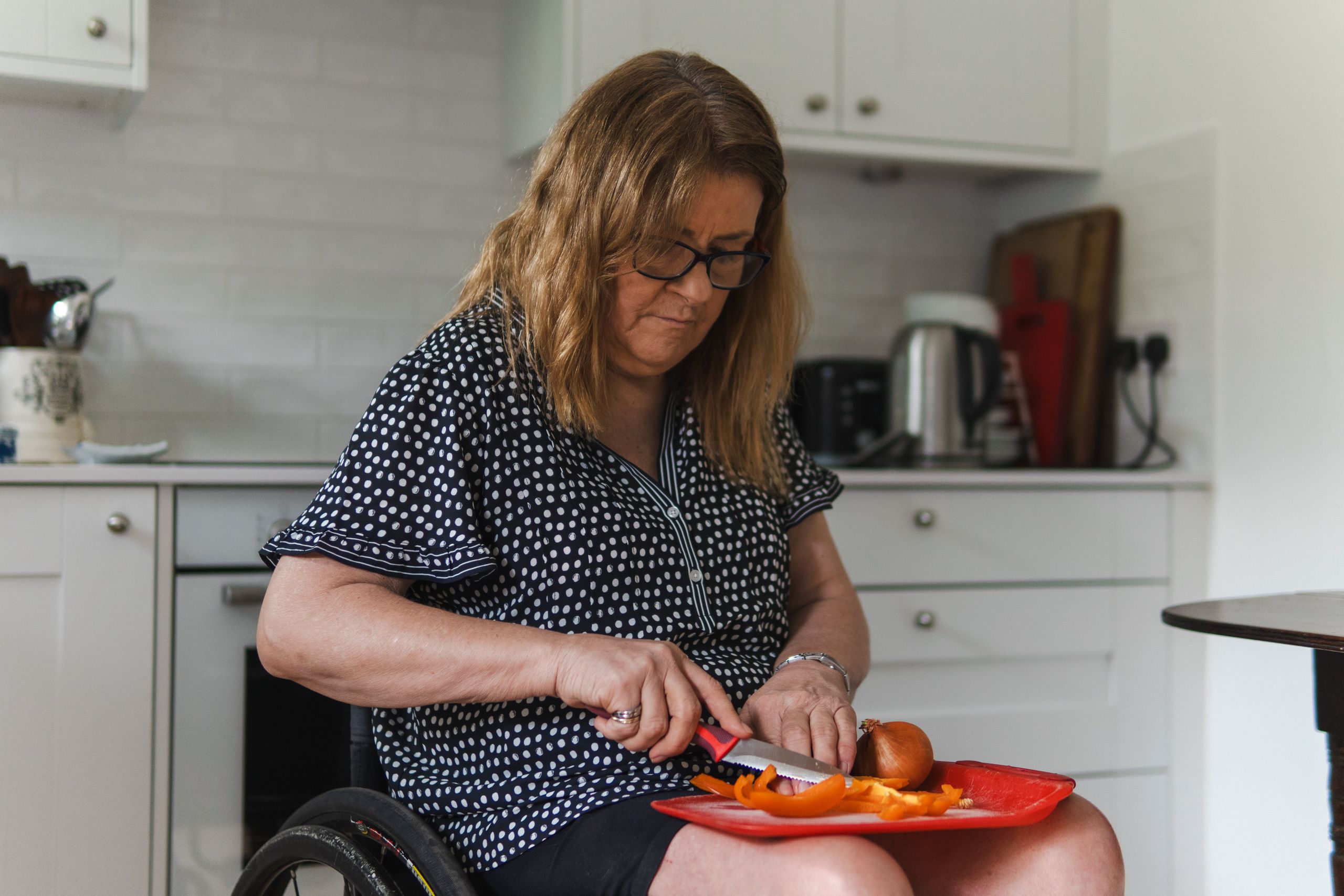
My partner, R, supports me completely. When I’m struggling, he picks up the slack around the house without complaint. If I’m unable to cook, he takes over meal prep. He manages our dogs, ducks, chickens, quail and gardens on our little homestead when I need help. Most importantly, he reminds me every day that I’m not facing this alone.
After years of being doubted, dismissed and made to feel like a burden, having someone believe me has been life-changing.
He doesn’t question my pain.
He doesn’t make me feel guilty for using mobility aids.
He doesn’t treat my limitations as an inconvenience.
Instead, he reminds me that we are a team, and that together, we’ll get through whatever comes next.
That kind of support isn’t just helpful, it is healing.